Buying Guides
What Is THD? How to Read the Distortion Number
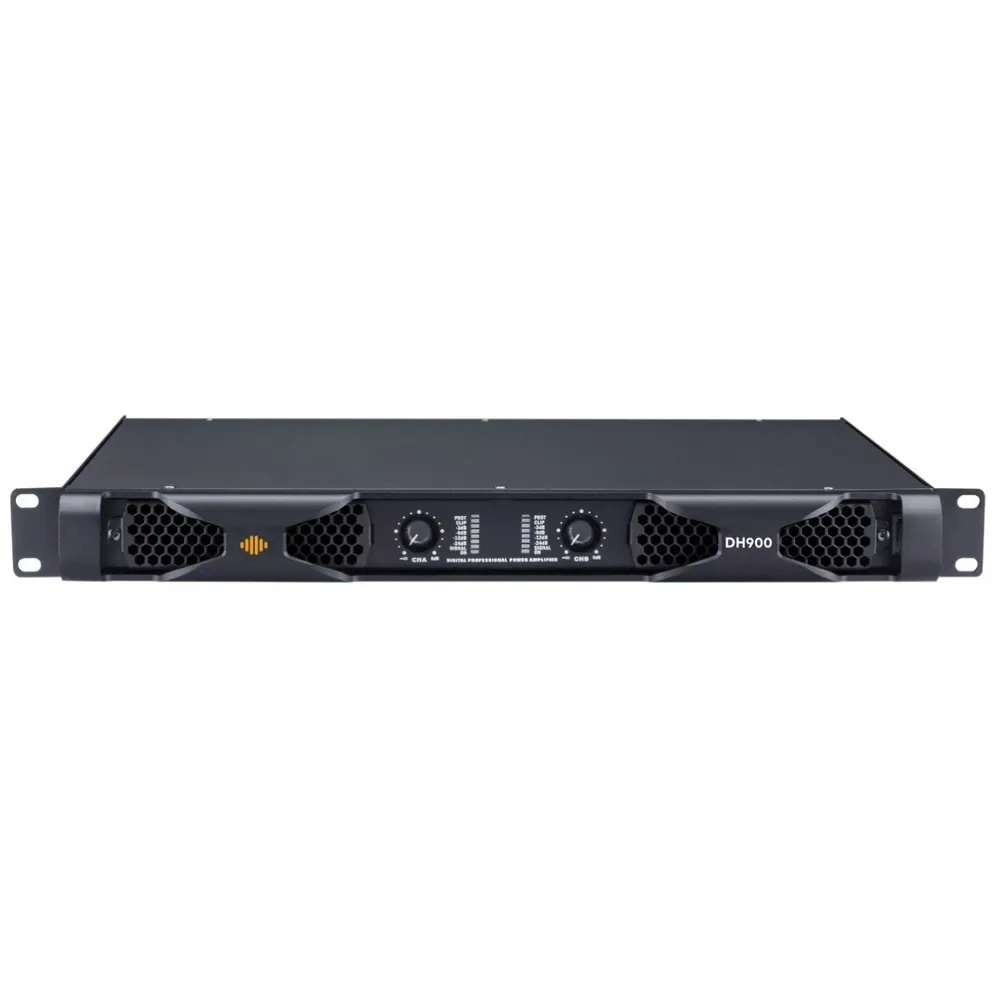
Every amplifier adds a little distortion to the sound. THD tells you how much. If you know how to read it, the number is useful. If you read it the wrong way, it will mislead you.
- What THD is
THD stands for Total Harmonic Distortion. When an amplifier plays a single clean tone, it also produces faint extra tones — harmonics — that were not in the original signal. THD is the level of those extra tones, shown as a percentage of the output.
A lower number means a cleaner amplifier. 0.05% means the distortion is 0.05% of the signal. 0.005% is ten times cleaner than 0.05% — on paper.
- What the numbers mean in practice
Here is the part that matters most: below about 0.1%, distortion is very hard to hear in normal music. At 1%, most people can start to hear it. So an amplifier at 0.05% and an amplifier at 0.005% will sound the same to your ears in normal use — even though one number is ten times smaller.
Do not pay extra just for a smaller THD number. Once the number is low enough, other things matter more: enough power, good protection, and a quiet fan.
- THD and THD+N are not the same
Most spec sheets print THD+N, not THD alone. The "+N" means noise is included. It is the more honest number, because an amplifier always has a little noise as well as distortion.
When you compare two amplifiers, compare the same kind of number — THD+N with THD+N — and check that both were measured the same way.
- The conditions matter more than the number
A THD number is only true for the conditions it was measured under: the power, the frequency, and the load. It is usually measured at 1 kHz, at 8 ohms.
Two things to watch:
Power. Distortion rises as the amplifier gets close to its maximum power. A THD of 0.05% at full rated power is a more honest number than 0.001% measured at one watt.
Frequency. Distortion is usually higher at very low and very high frequencies than at 1 kHz. If you play subwoofers, ask for the number at low frequencies, not just at 1 kHz.
If a spec sheet does not say how the number was measured, the number does not tell you much.
- Where distortion really comes from
In a real system, most of the distortion you hear does not come from the amplifier at all.
Clipping. When an amplifier is driven past its limit, it clips the sound, and the distortion jumps suddenly. This is the most common cause of bad sound — and of damaged speakers. The fix is enough power, not a lower THD number.
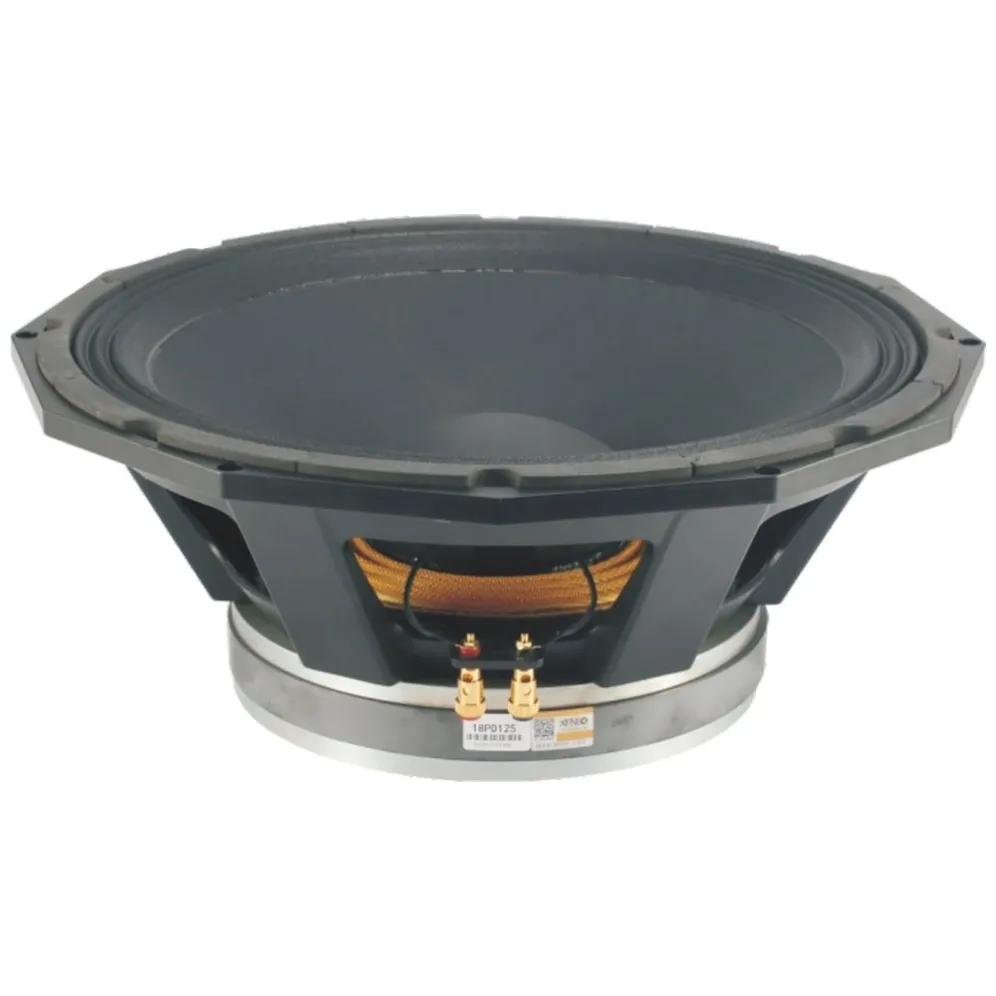
Drivers. A speaker driver also distorts, especially when it moves a long way — at high volume, or on deep bass. A subwoofer working hard will have more distortion than the amplifier driving it. Low frequencies also hide distortion well, so a little extra THD on bass is normal and hard to notice.
What to send us
If you are comparing amplifiers and want help reading the numbers, send us:
The amplifier models you are comparing, and their THD or THD+N numbers.
How the numbers were measured, if the spec sheet says so — power, frequency, and load.
Your speakers, and how loud the system needs to play.
Tell us the numbers, and we will tell you what they actually mean for your system.
— Belinda, Brave Audio